Domains of Surrealist Vigilance
Robin Hood
THE EXPROPRIATORS' FORESTROBIN HOOD
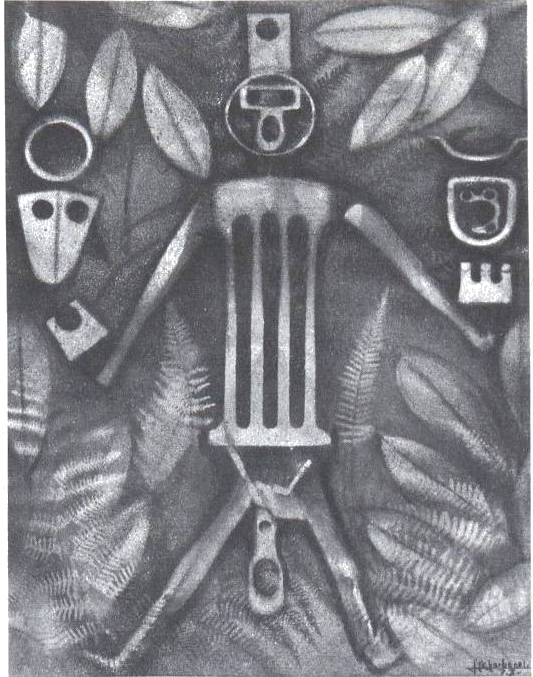
A merry bandit lurks behind every tree in the laughing forest of green gloves, the chosen shelter for the fraternity of outlaws. But this leafy paradise for lawbreakers and lovers proves to be only a baffling maze of contradictions to the forces of law, order and injustice.
Wherever you find injustice, the proper form of politeness is attack.
— T-Bone Slim
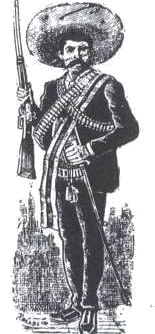
Robin Hood and his band lead a life of adventure, humor and love-a life free of the constraints of everyday misery, free above all of the necessity of work. Many scholars doubt that Robin Hood ever existed; others maintain that if there "really was" such a person, he must have lived around the year 1190. What is not to be doubted is that then, as now, the rich were robbing the poor to make themselves richer and the poor poorer. Robin Hood, the "prince of bandits," did his best to even the score a little-it was his pleasure to do so. As an early account says, "Poore men's goodes he spared, abundantlie relieving them with that which he got from the abbeys and the houses of the rich." The Sheriff of Nottingham is tricked and tricked again, defeated not by force of numbers or by strength but by the superior intelligence of the bandits. Robin proves he is the best archer in England and escapes the trap set for him-as he escapes all traps.
Flowers
Are
Near-sighted
Without
Their leaves
— Malcolm de Chazal
Everyone knows, across these seven hundred years, the names of Little John, Friar Tuck, Maid Marian and Alan-A-Dale, and their bold adventures. Sherwood Forest draws only those who would refuse to serve the tyrants, preferring to play and love and live outside the law. Scholars may doubt as they please, but they cannot reduce to legend others who, closer to us in time, have taken Robin Hood's path, such as Pancho Villa and Buenaventura Durruti, who link the bandits and peasant revolts of former times to the proletarian revolution of our own day.
In a greene Arbour made of yellow starch, Betwixt two Brokers howling Madrigales, A banquet was served in of Lampraies bones, Well Pickel' d in the tarbox of old time.
Turning thrice round, and stirring not a jot, He threw five tunne of red hot purple snow
— John Taylor, the Water-Poet ("News from No-Place," early 1600s)
Surrealists, and all true poets, take part in this outlaw tradition. Refusing to become the instruments of our own exploitation, we are willing and able to use the red science of expropriation and the green mathematics of humor. We take the degenerate commodities of this society and reassemble them as images of dreams-as the spirit of the future. Surrealist objects and collages embody this subversive spirit, just as collective drawings and surrealist games negate the rampant "individualism" of bourgeois society in favor of revolutionary fraternization.
The Marvelous is our Sherwood Forest: a source of ceaseless discovery and inspiration, it protects us from the brutalizing forces of the mundane, while it baffles and tricks the fools and tyrants whose "real" and "rational" lies are only targets for the arrows of poetic revolt.

SATURDAY HALFMOON
The wind has blown the boredom through the trees of hate, leaving behind emus. The sweet breath of wolves cracks the door to the ship of the sun, and yet, what can one lift with golden teeth of sponge, squeezed whole out of the crusts of light stolen from the mirrors drifting on the blazing faces? The sound of the moon was heard by seahorses waiting to be delivered to glass-covered teepees, to smoke glowing ruby-like fish-eggs which melt one by one as the fiery stagecoach passes like a match in front of a blind man's eyes, through the door of a wave opening to reveal the titanic dragonflies caused by a speeding arrow through the jungle of thought, eventually striking the ear of injustice.
13 September 1975
(collective text)
Jean-Jacques Jack Dauben
Franklin Rosemont
Paul Garon
Penelope Rosemont
Jocelyn Koslofsky
Brooke Rothwell
Ronald L. Papp
Janine Rothwell