Domains of Surrealist Vigilance
Fantômas
THE DESTINY OF EVIL
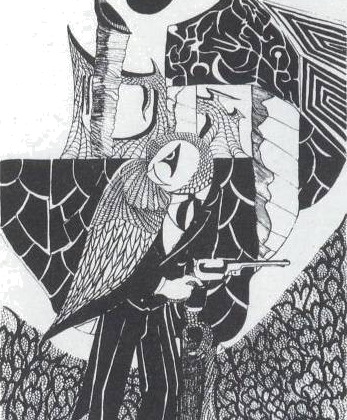
As the white cliffs of Dover dissolve into a sea of anticipated vengeance, Her Majesty's tuba-playing protectors catch a glimpse of a sinister shadow sizzling with rage. Through binoculars of blood rushing to their minds' eye they see (only for a second, but what a second!) the one who has entered the very heart of the secret of Evil, the Absolute Enemy of Law and Order: Fantomas!
The forgiveness of God, a pretty turn of phrase to disturb us. But what can this hypocrisy do against free insolence fully developed?
— René Crevel
Fantomas is the elegant savage with the movements of an automaton. He is master of the fine arts of cruelty and crime; genius of escape and disguise; arsonist of the inner life turned inside-out. He is the not-quite-invisible marauder (now you see him, now you don't), the magical perfecter of unprecedented outrage, kin and heir of that man with lips of bronze, Maldoror. The names of these two lurkers in the blackest mirrors have come to symbolize a total scorn directed against a life too petty for words. Like Maldoror, Fantomas never got caught. Both are with us still, ageless, forever bursting with "the storms of youth."
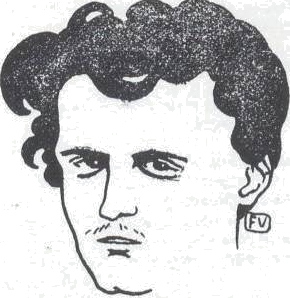
Descriptions of Maldoror fit Fantomas like a safecracker's glove: "Today he is in Madrid, tomorrow he will be in St. Petersburg, yesterday he was in Peking This bandit is perhaps seven hundred leagues away from the country; perhaps he is a few steps away from you Mesmerizing the flourishing capitals with a pernicious fluid, he reduces them to a state of lethargy in which they are not able to look out for themselves as they should: a state the more dangerous as it is unsuspected."
MENAGERIE OF WINGS
Your eyes revive the grist of sickles plumes of frantic mosquitoes emboss an earring of blood x-rayed under acquiline tents whose glaciered frontage flints the careless edge of a guillotine lamenting now upon your neck's derailment
From this aviary condemned to perpetual drought your shadow sprinkles its human lake over trysts that otherwise suture my laugh expelled to hunt in the vault's lasso
initial flowers of carbonized lust
Deranged by your absent gaze I swivel about the resurrected platform of sleeping larks who dream amulet of Sahara's mercurial bosom Volcano of Maypoles who embrace a menagerie of wings
— Allan Graubard
It is almost certain, however, that the creators of Fantomas did not know the work of Lautréamont. Pierre Souvestre and Marcel Allain were writers of what is too casually dismissed as "pulp" fiction. Fantomas was the hero of thirty-two volumes that were extremely popular, as was the great epic film version of Fantomas by Louis Feuillade. This popularity did not prevent true poets from recognizing what was at stake here.
"From the point of view of imaginativeness," wrote Apollinaire, "Fantomas is one of the richest works in existence.' René Magritte introduced Fantomas into his paintings and wrote of him with boundless admiration: "When memories pursue him he follows his arm, which drags him away He brushes aside any furniture or walls that are in his way We do not guess, and we cannot doubt, his powers."
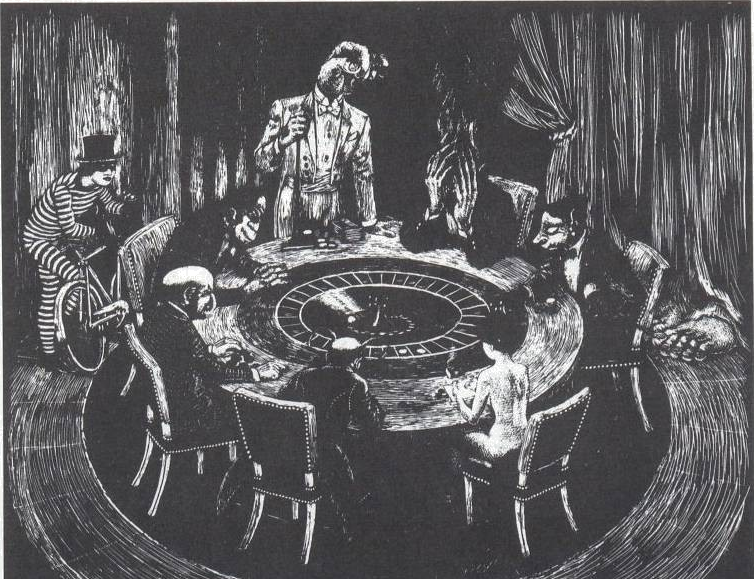
Against all the blubbering traditions, far from the baboon-faced inspectors and cops in their cast-iron suits, beyond all reproaches emanating from a morality not his own, Fantomas remains the permanent outwitter of all that is merely "good," the nocturnal avenger of all dreams that are determined to stop at nothing.